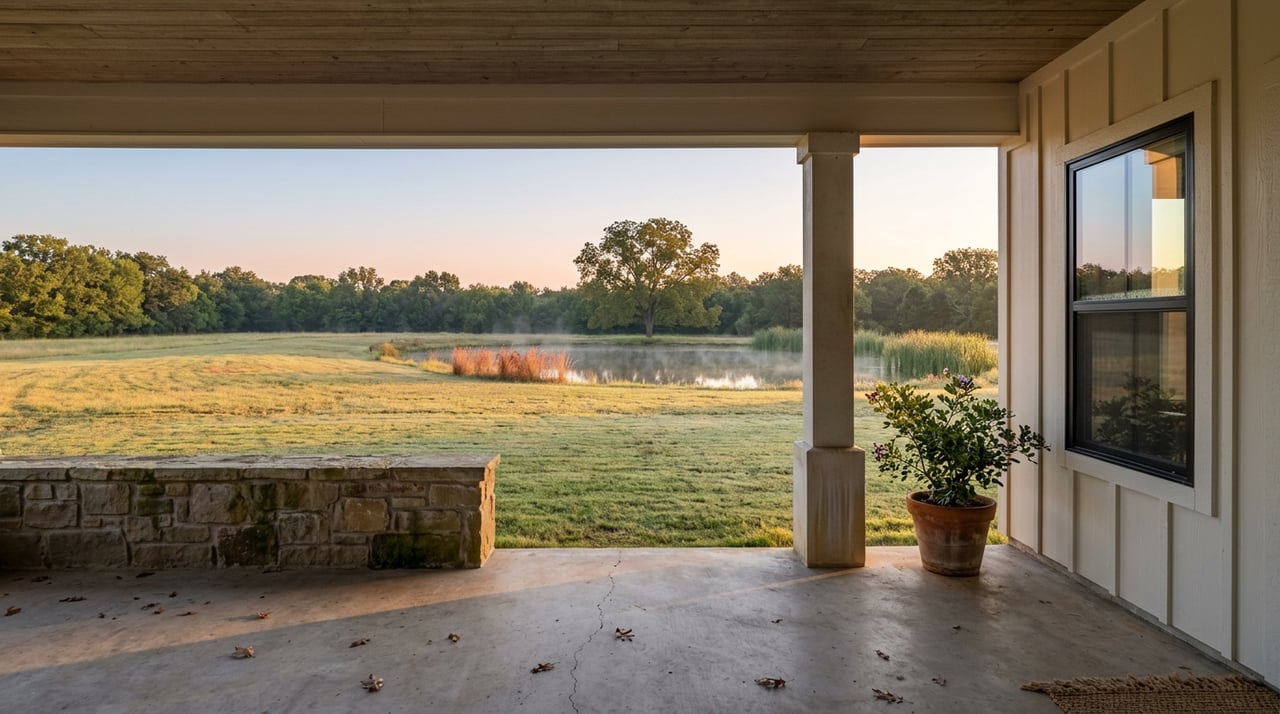
Picture the scenario: you're touring a 15-acre place off FM 917 near Godley, and the listing sheet has a line that catches your eye. Property taxes: $180 a year. On land that would sell for well into six figures, that number does a lot of the selling for the seller. It suggests a lifestyle where the acreage costs you almost nothing to hold.
Here's what that listing sheet doesn't say. That $180 belongs to the seller's paperwork, not to the land, and it does not travel with the deed. If you close on that property and do nothing else, the low bill you saw on the listing is not guaranteed to be your bill next year. It might not even be your bill this year.
The Valuation Follows the Filing, Not the Fence Line
What most people call an "ag exemption" in Texas is not an exemption at all. It's a special appraisal method under the Texas Constitution that lets qualifying farm, ranch, and wildlife-management land get taxed on what it produces rather than what it would sell for. The Texas Comptroller's office is direct about this: land owners apply for special appraisal based on the property's productivity value, and that productivity value is usually far lower than market value.
The distinction matters because a special appraisal is granted to a specific owner for a specific use. It is not a status stamped permanently on the parcel. When ownership changes, the appraisal does not carry over automatically. The new owner has to file their own application, typically Form 50-129, with the county appraisal district, and the deadline is April 30 of the year following the purchase. Miss that window and there is no valuation to fall back on, even if the cattle never left the pasture.
That gap between closing day and the April 30 filing deadline is where a lot of new landowners get caught. They assume the low number is baked in. It isn't. It's a renewal they have to actively request, on a clock that starts the moment they sign.
Buying the Land Doesn't Trigger a Rollback. Changing It Does.
The good news, and it is genuinely good news, is that the act of purchasing ag-valued land does not by itself cost you anything extra. Under the common 1-d-1 open-space appraisal that covers the overwhelming majority of Texas ranch and farm parcels, a sale on its own does not trigger a rollback tax. The trigger is a change in how the land is used.
There is an older, less common appraisal category, 1-d, that works differently. It requires agriculture to be the owner's primary occupation and income source, and almost nobody in North Texas qualifies for it anymore. But if a property you're evaluating happens to carry a 1-d appraisal instead of 1-d-1, the sale itself does trigger the rollback, regardless of what you plan to do with the land. It's worth asking your appraisal district which type is on file before you assume the more forgiving rules apply.
Here's a quick comparison of how the two categories behave when land changes hands:
| 1-d-1 (Open-Space, common) | 1-d (Ag-Use, rare) | |
|---|---|---|
| Sale alone triggers rollback | No | Yes |
| What triggers rollback | Change in qualifying use | Sale or change in use |
| Lookback period | Three prior years | Three prior years |
| Interest on back taxes | Added annually | Added annually |
| Occupation requirement | None | Agriculture must be primary income |
Both categories were adjusted by a 2019 change to state law that shortened the rollback lookback window and reduced the interest rate landowners previously faced, which matters if you're running the numbers on an older listing that references pre-2019 terms.
The Size of the Number Depends Entirely on the Gap
The rollback bill is the difference between what was actually paid under the agricultural valuation and what would have been paid at full market value, for each of those three years, plus interest. The size of that gap is what makes rollback either a rounding error or a serious liability.
A commonly cited illustration involves a 25-acre tract near a growing suburb with a market value around $750,000 and an agricultural value of roughly $5,000. On a tract with that kind of spread, three years of back taxes at market rate plus interest adds up fast. On a larger scale, a 200-acre ranch converting out of ag use entirely has been estimated to generate a rollback bill north of $130,000. The number isn't fixed. It moves with how close your land sits to the kind of growth that pushes market value away from agricultural value, which in Johnson County increasingly means anything within reach of Burleson, Cleburne, Alvarado, Joshua, or Godley.
Building One House Doesn't Undo the Whole Ranch
This is the part that surprises people in the other direction. If you're buying acreage with the intention of putting one home on it and keeping the rest in grazing or hay production, you are not rolling back the entire tract. The carve-out is prorated. Build a homesite on 2 acres of a 200-acre property, and rollback applies only to those 2 acres, provided the remaining acreage stays in qualifying use and the county's paperwork reflects the split.
There's a related detail worth knowing before you design that homesite. Appraisal districts typically remove one acre from the ag or wildlife valuation to cover the footprint of a residence, and that acre gets taxed at market value regardless of what surrounds it. A homestead exemption can offset that piece if the property becomes your primary residence, but the ag rate never applies to the house itself.
Who Actually Pays the Bill
Rollback liability is negotiable, and the standard TREC Farm and Ranch Contract addresses it directly. The party who causes the change in use is generally the one responsible for the resulting tax. If you buy land under an active ag valuation and later convert part of it to a homesite or a commercial use, that bill lands on you, not the seller, because you're the one who changed the use after closing.
Sellers carry their own obligation here. Advertising a low tax bill without disclosing that it rests on an agricultural appraisal, and that the valuation is fragile to a change in use, sets up a dispute nobody wants to have after closing. Full disclosure of the current appraisal type and any pending rollback exposure protects both sides of the table.
Wildlife Management Is a Conversion, Not a Starting Point
If the idea of running cattle or hay doesn't fit your plans but you still want the tax benefit, wildlife management valuation is often the answer, and it carries the same favorable tax treatment as traditional agricultural use. But it comes with a sequencing rule people miss: your land generally has to already carry an ag valuation before you can convert to wildlife management. You cannot go directly from market value appraisal to wildlife valuation except in a narrow set of cases involving a federal conservation easement tied to an endangered species. Once you've converted, the state requires you to actively carry out at least three of seven defined practices each year, things like supplemental water, predator control, or habitat management, and the switch itself is revenue neutral. Your tax bill doesn't change, only the activity that justifies it.
Before You Sign on Anything in Johnson County
A few questions are worth settling before you're at the closing table:
- What appraisal category is currently on file, 1-d-1 or the older 1-d, and does that change how a future sale would be treated?
- Has the seller disclosed any change in use that's already happened, even something as small as fencing off a yard?
- If you plan to build, how many acres will actually leave qualifying use, and has that carve-out been discussed with the appraisal district?
- What is your filing deadline for the new application, and who is tracking it?
The Central Appraisal District of Johnson County, at 109 N. Main St. in Cleburne, handles these applications and protests for the county, and their own guidance notes that fast-growing areas near Burleson value very differently than older homes in Cleburne or the rural tracts stretching toward Alvarado, Joshua, and Godley. A call to their office, or a look at their property valuation process, is a reasonable first step before you write an offer. For the state-level rules on wildlife management specifically, Texas Parks and Wildlife's legal summary walks through what qualifies and what doesn't.
A Few Questions Worth Asking Directly
Does the ag valuation transfer if I buy from a seller who already has it approved? Not automatically. You have to file your own application, generally by April 30 of the year following your purchase, even if the qualifying use never stopped.
If I lease my acreage to a neighbor's cattle, does that still count? Yes. The land has to be in qualifying use, but it does not have to be your own livestock. Grazing leases are a common way owners who live elsewhere keep the valuation active.
Can the rollback tax follow me if I buy land that already lost its valuation years ago? No. Rollback applies to the owner who caused the change in use at the time it happened. If a prior owner already triggered and paid it, you're not inheriting that liability, though you will be starting from market value going forward unless you requalify.
Buying acreage in Johnson County or anywhere across North Texas should feel like the start of something, not a paperwork trap. The rules around ag and wildlife valuation are workable once you know where the deadlines and the trigger points actually sit. That's the kind of groundwork The Alexa Boedeker Team walks through with buyers and sellers before an offer ever goes in, so the tax line on the listing sheet is a starting point for a conversation, not a surprise waiting at the courthouse. Contact us when you're ready to look at land the right way.