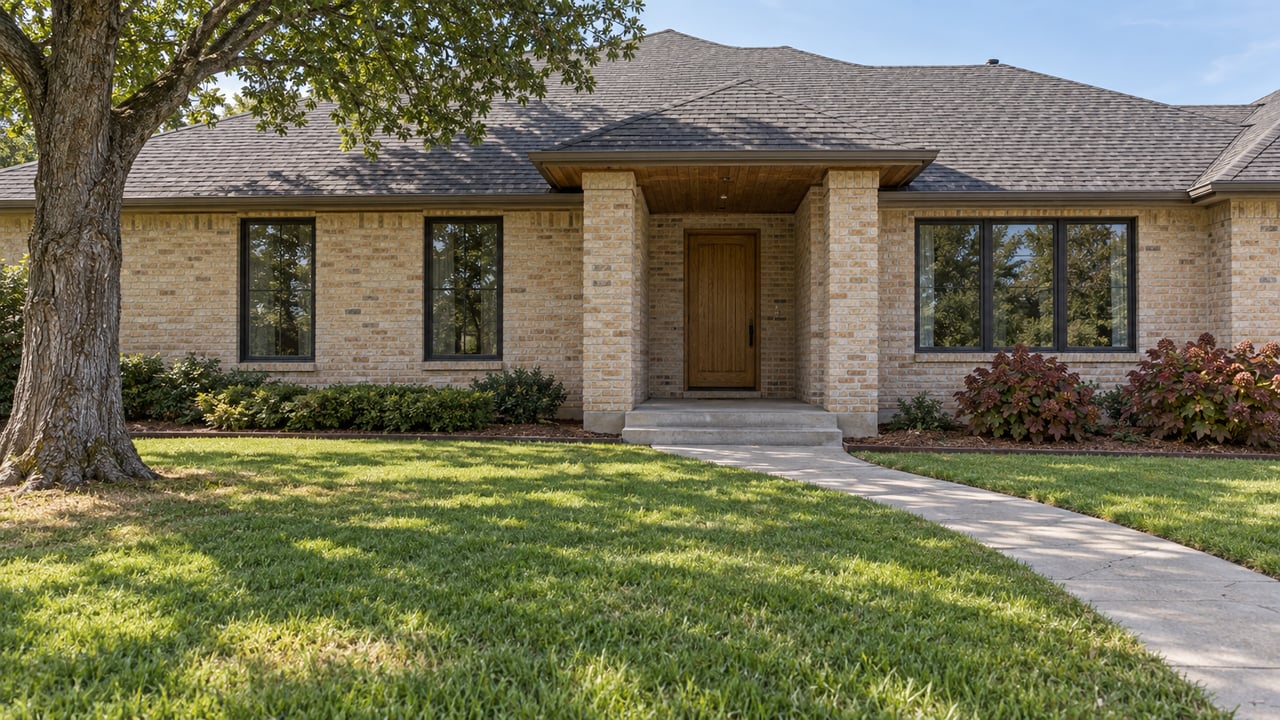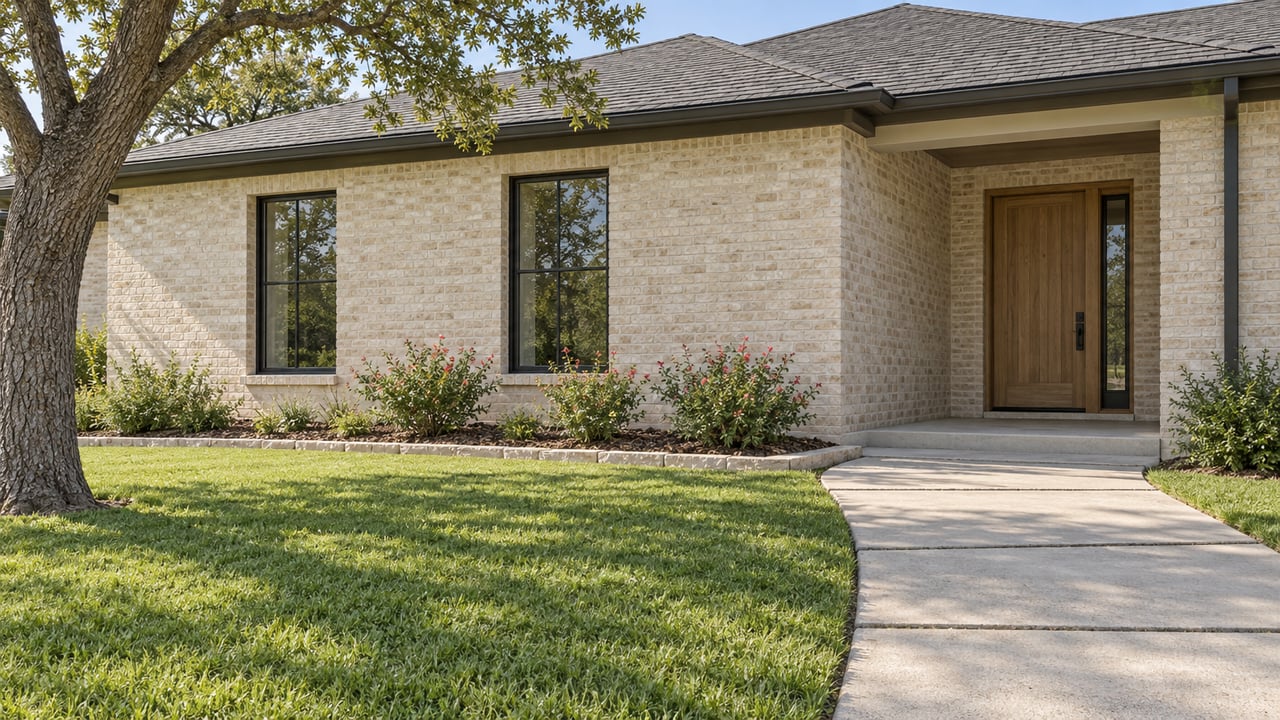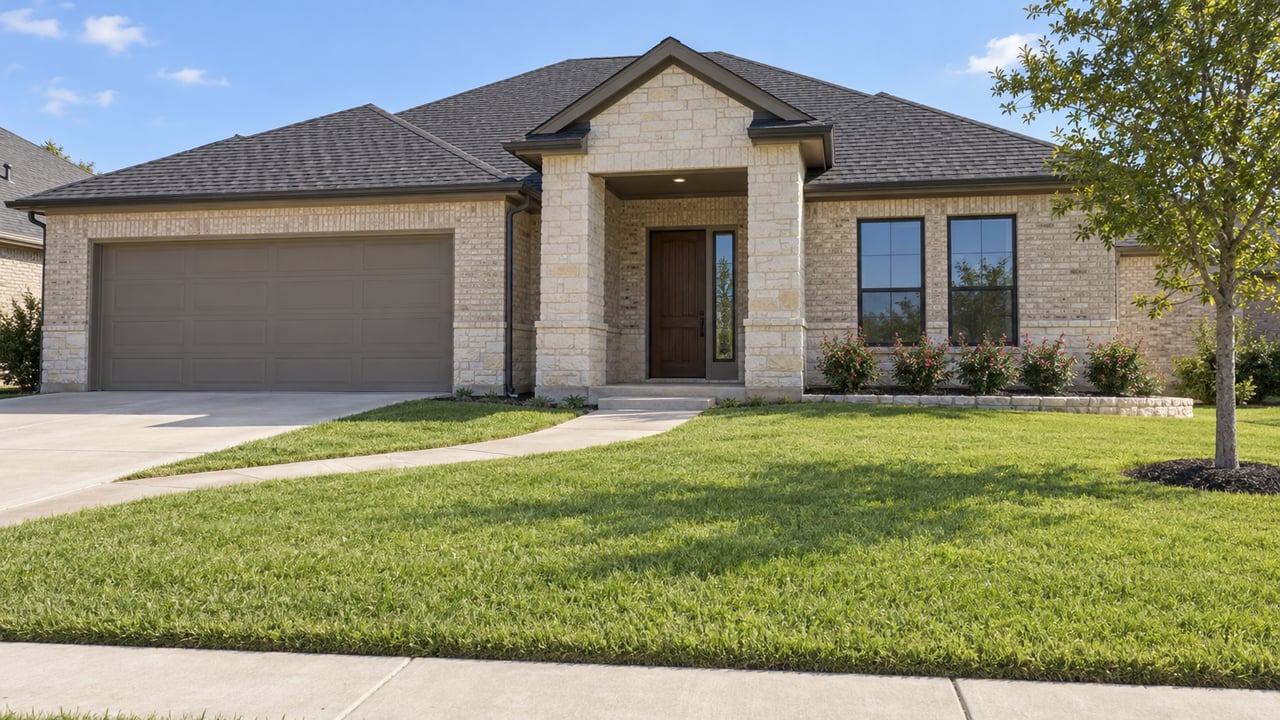
On Miller Road in Midlothian, three new-home sales offices sit within a few doors of each other: First Texas Homes at 3121, Kindred Homes at 3141, and Lillian Homes at 3149. All three are selling in Westside Preserve, a community off U.S. Highway 287. All three list the same $1,200 a year in HOA dues. Each one quotes a different property tax rate.
The gap between those three rates is small. What matters more is a fourth number that none of the rates include. Westside Preserve sits inside a Public Improvement District, and its PID bill runs about $2,800 to $3,150 a year depending on lot type. It isn't a rate at all. It's a fixed installment on bonds the City of Midlothian issued to pay for the community's infrastructure, and on a home near the advertised starting price it adds roughly three-quarters of a percentage point to the yearly cost of owning the house.
What each sales office says the tax rate is
Here's what each builder's site showed in early October 2026:
| Builder | Quoted tax rate | HOA dues | What the page says about the PID |
|---|---|---|---|
| Kindred Homes | 1.92%, labeled an estimate subject to change | $1,200 a year | No PID mention in the community and fee sections |
| First Texas Homes | 1.99% | $1,200 a year | No PID mention in the highlights or description |
| Lillian Homes | 2.019% | $1,200 a year | Says the rate excludes the community's PID |
Lillian Homes states it directly. Its FAQ gives the 2.019% figure, then says the community has a PID that isn't included in that number and suggests contacting the sales manager for current details. None of this is a sales trick. A tax rate is a percentage of appraised value, and the Westside Preserve PID installment isn't calculated that way. So it can't be folded into a percentage, and it has to be listed as its own line.
Where the fixed installment comes from
Midlothian City Council created the Westside Preserve Public Improvement District by resolution on January 25, 2022. That August, it approved a Service and Assessment Plan that levied assessments on the property to pay for the district's infrastructure. Each lot got a share of that cost as a total assessment, which is paid down in yearly installments.
The city's 2025 Annual Service Plan Update, dated August 12, 2025, carries the assessment roll lot by lot:
- Lot Type 1: outstanding assessment of $35,943.24, with a 2025 annual installment of $2,793.90
- Lot Type 2: outstanding assessment of $40,581.08, with a 2025 annual installment of $3,154.40
Those 2025 installments were billed to the lots on the roll and became delinquent if unpaid by January 31, 2026. They're the most recent per-lot figures we've verified. The city council had the 2026 Annual Service Plan Update and assessment roll for Westside Preserve on its consent agenda for August 25, 2026, so a newer roll exists or is coming, and the city is where the current numbers live.
The district is big enough that these numbers will appear on a lot of closing statements. Improvement Area #1 is planned for 590 lots. Final plats were recorded for Section 2A, with 72 lots, in January 2024, and for Section 1B, with 122 lots, in December 2024. A second phase, the Major Improvement Area, plans 481 residential lots across five more lot types but had no recorded plats as of the 2025 update.
The math at the advertised starting price
Kindred advertises Westside Preserve homes starting at $410,000, and First Texas lists the community "from the $400,000's." Suppose a home there appraises at $410,000 and carries Kindred's 1.92% estimate. Property taxes would be about $7,872 a year. Add the 2025 Lot Type 1 installment of $2,793.90 and the total is about $10,666. Divide that by $410,000 and the effective annual rate comes to roughly 2.6%.
The same arithmetic for each lot type:
- Lot Type 1: $2,793.90 is about 0.68% of $410,000.
- Lot Type 2: $3,154.40 is about 0.77% of $410,000.
- HOA dues: the $1,200 a year adds another 0.29% or so.
Lower-priced homes feel the installment more. On homes Lillian listed in the high $500,000s and low $600,000s, the same dollar installment is a smaller share of value. The bill depends on lot type, not on the house price, so the buyer of the least expensive home in the community carries the PID at the highest effective rate.
Why a fixed bill behaves differently from a tax rate
Midlothian has an older PID that shows the contrast clearly. The MidTowne PID was created in 2008 to pay for improvements and services above the city's standard level for property owners inside the district. For FY 2026-2027, the council set the MidTowne charge at $0.12 per $100 of appraised value for residential lots of record, against a total district budget of $143,400. On a $410,000 appraisal that's about $492 a year. Because it works like a rate, it rises when the home's value rises and falls when the value falls.
The Westside Preserve installment works differently. The five-year budget forecast in the 2025 update breaks each year's total into principal, interest, "Additional Interest" that funds a delinquency and prepayment reserve, and annual collection costs. In the first forecast year of the larger bond schedule, the district owes $393,000 in principal and $1,190,276.25 in interest. Interest is about three of every four dollars of debt service. Over the five years shown, the total annual installment for that schedule holds near $1.74 to $1.77 million.
For a homeowner, that means three things:
- A drop in appraised value doesn't shrink the PID bill. A successful protest at the appraisal district lowers the tax portion but leaves the installment alone.
- Early installments go mostly toward interest, so after a few years of payments the outstanding assessment hasn't dropped much.
- The installment can still move a little from year to year. Interest, collection costs, administration, and delinquencies all feed into it, and the city's buyer notice says so.
Paying it off instead of carrying it
The same buyer notice says the assessment can be paid in full or paid in annual installments. Prepayment is an actual option the service plan tracks. As of the 2025 update, no one in Improvement Area #1 or the Major Improvement Area had made a full or partial prepayment. For a Lot Type 1 home, a full payoff means roughly $36,000 of cash on top of the down payment, so it makes sense that nobody had done it yet. The payoff figure for a particular lot comes from the city, and the right choice depends on the household's finances. A lender or tax professional can help with that decision. This post only explains the mechanics.
When the PID notice reaches a buyer
Texas law moves the PID conversation earlier in a sale than many buyers expect. Under Texas Property Code § 5.014, a seller of property in a covered PID has to give the purchaser written notice that names the municipality, the property address, the district, and the buyer's assessment obligation. The notice has to explain that the assessment can be paid in full or in annual installments that may vary. It also has to direct the buyer to the city or county for the exact amounts and warn that nonpayment can lead to penalties, interest, a lien, and foreclosure. Section 5.0141 requires the notice before a binding purchase contract is signed, and Section 5.0142 requires the buyer's signature acknowledging they received it.
That timing helps a buyer who is comparing communities. The notice comes before the contract is signed, but it also comes after the model home tour and after the payment estimate built on the advertised rate. A buyer with the assessment roll in hand before visiting the sales office compares Westside Preserve on its full carrying cost from the start.
The same question is coming up elsewhere in Midlothian
Westside Preserve isn't the only PID on the city's calendar. The August 25, 2026 council agenda also included a public hearing on an amended and restated service and assessment plan and assessment rolls for Improvement Areas #3 through #6 of the Redden Farms Public Improvement District, along with 2026 special assessment revenue bonds for those areas. We haven't confirmed per-lot figures for Redden Farms. The structure is the same, though: bonds come first, and lot-by-lot installments follow on future tax bills.
Most of Midlothian's base rate stack is public and easy to find. For FY 2026-2027, the city's adopted budget uses a property tax rate of $0.64 per $100, and Midlothian ISD adopted $1.02969 per $100. The PID line is the part a buyer has to look up separately.
Quick answers
Is the PID the same as a MUD? No. A Municipal Utility District is its own taxing entity that repays its bonds through property taxes and fees on residents. The Westside Preserve PID is a city-levied assessment with a fixed per-lot schedule.
Where do I find the current installment for a specific address? The City of Midlothian adopts an annual service plan update with a lot-by-lot assessment roll. The 2025 Westside Preserve update is public, and the 2026 update was before council on August 25, 2026.
Does the HOA fee cover any of this? No. The $1,200 in annual HOA dues that all three builders quote is a separate charge from the PID installment.
If you're comparing Westside Preserve with a resale home or another Ellis County community, we can pull the current assessment roll for the lot you're looking at and set the full yearly cost next to the advertised rate before you sign anything. The Alexa Boedeker Team is happy to go through those numbers with you.
This article is general information, not legal, tax or financial advice. Consult a qualified professional about your situation.